
Photo: Natalia Gutnik
An Antidote To Speed
The case for occasionally slowing down in a world of AI-accelerated development and why your cognitive supply lines matter as much as your perceived velocity.
There is a particular seduction to speed. With tools like Claude Code, you can move from idea to working implementation in minutes: scaffolding an API, wiring up a frontend, resolving a class of bugs that would have taken hours before. It feels like flying. The feedback loop tightens, the backlog shrinks, and you find yourself shipping things you would have deferred indefinitely only a year or two ago.
(Trust me on that 😉 I am something of an expert procrastinator)
As of late, I have been fortunate to contribute in environments where there is a general top-down appetite for the adoption of frontier tooling.
The problems are varied, sometimes interesting, sometimes rote mental skirmishes but often come with real scale and opportunity to optimise how one works day to day. Not everyone gets that, and I do not take it for granted.
However, speed has a shadow. The faster you move through a problem, the thinner your understanding of it can become. You can find yourself holding a codebase together with solutions you didn't fully author (more often than not these days), patterns you haven't internalised, and abstractions you haven't stress-tested mentally.
For me, a certain dissonance occurs when you tell your digital co-worker that they are an industry expert with 450 years of experience and voilà... a codebase appears.
The code works. How much is understood? Well, that is the question.
The Problem With Always Moving Fast
When a tool produces a working result almost immediately, the temptation is to accept it and move on. Why dwell on the implementation when the tests are green and the feature is deployed? The incentive to slow down disappears because there is no visible cost to going fast.
The cost shows up later. It arrives when you need to extend something and realise you do not actually understand the model it was built on. It surfaces when a subtle bug appears in production, and you stare at the code as though reading someone else's handwriting, and it becomes visible in a code review where you cannot explain a decision you nominally made.
This is not unique to AI-assisted development. Senior engineers have always cautioned against copy-pasting Stack Overflow answers without understanding them. What AI tools do is raise the ceiling on how fast you can accumulate surface-level understanding. The gap between what you have shipped and what you truly know can grow quickly and quietly.
What Slowing Down Actually Means
Slowing down does not mean going back to writing every line by hand, nor does it mean distrusting tools that make you more productive. It means being deliberate about when you engage deeply versus when you delegate freely. Breadth and depth are not inherently mutually exclusive. To consider otherwise is a polarised philosophy.
There are moments in a working day that are worth protecting from speed. When you encounter a new concept, be it a design pattern, a protocol, or a language feature, resist the urge to generate an example and move on. Spend time with the primary source, read the RFC, work through the algorithm on paper if it helps. Build the toy implementation that no one will ever ship, just to feel how the thing actually works.
There are also moments when the right response to a generated solution is not acceptance but interrogation. Ask why the code is structured the way it is. Rewrite it yourself without looking. Try to break it. These habits feel inefficient in any given moment, but they are how understanding compounds.
Not all ideas are meant to survive, and that is fine. One underrated quality of modern tooling is how quickly it can help you stress-test a concept and discard it. The goal is not to preserve every generated solution but to understand why you are keeping the ones you do.
Einstein called compound interest the eighth wonder of the world. He was talking about money. The same logic applies to understanding. The person who invests a little comprehension every day ends up, quietly and without drama, in a completely different place to the one who just keeps moving.
The Distinction Between Speed and Progress
Speed and progress are not the same thing, even though they feel identical when you are deep in a flow. You can move very fast and accumulate very little understanding. You can also move slowly and build a mental model that pays dividends for years.
The best engineers learn to read the difference in themselves. There is a particular quality of engagement when you are genuinely learning: a slight friction, a need to pause, a sense of things clicking into place. When this feeling is absent for too long, it is usually a sign that you have been executing rather than thinking.
This is not an argument against execution. Execution is how things get built. But most engineers who do this work long enough find that the periods of deep learning, the weeks spent really understanding a distributed systems concept, or a type system, or a network protocol, are the periods that most change what they are capable of building.
Carving Space In A World That Rewards Output
Practically speaking, how do you protect time for depth when the ambient pressure is always toward shipping? This is partly a personal discipline and partly a structural question about how you organise your work.
On the personal side, it helps to name what you are doing and be specific about it. There is a difference between "I am going to build this feature" and "I am going to understand this concept well enough to build this class of feature confidently." The second goal is harder to measure, which is exactly why it tends to get crowded out.
Some engineers keep a running list of things they have used but not truly understood: concepts, libraries, patterns, language features. Periodically revisiting that list and picking one thing to go deep on turns a vague sense of accumulated debt into something manageable and intentional.
It also helps to notice when the tools are doing cognitive work you should probably be doing yourself. If you are generating code and not reading it carefully, that is a signal. If you are accepting explanations without questioning them, that is another.
This doesn't imply line by line examination but at least understanding how any system operates is crucial for longevity of said system. This applies well beyond the realm of software engineering.
The tools are most valuable when they accelerate work you already understand, not when they substitute for understanding you have not yet built.
This is why I believe it is a hard time for the up and coming younger generation of engineers and knowledge workers in general. And why wouldn't it be? This landscape is completely uncharted. No human generation alive has been here before.
Checkpoints & Supply Lines
I have a great fondness for military history, so allow me to indulge in some analogies here.
Abraham Wald identified a relevant trap during the Second World War. The US Army Air Forces analysed bullet holes on returning B-17 Flying Fortresses and B-24 Liberators and proposed reinforcing the damaged areas. Wald pointed out the flaw: those were the planes that made it back. The ones hit where the holes were absent never returned to be counted. Reinforce the parts that look fine, because that is where the fatal hits land.
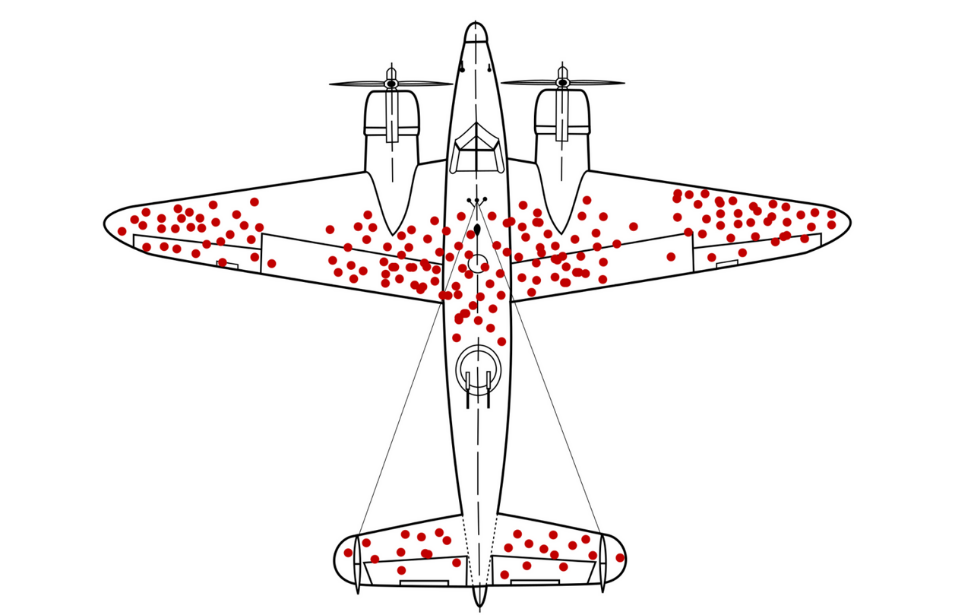
A detailed write-up of this counterintuitive thinking is available here https://www.warhistoryonline.com/war-articles/abraham-wald.html.
I like to think that the same bias operates in fast-moving engineering. The returning planes are your shipped features and green tests. Everything looks fine.
The vulnerabilities are in what you cannot see: the understanding you never built, the decisions you accepted without interrogating. You do not see that damage until it matters.
Choking An Advance
One of the most consistent lessons in military history is that armies which advance too quickly outrun their supply lines. The front moves forward, but the logistics cannot keep pace. The advance that looked like strength becomes a liability the moment it is tested. Choking off the supply lines leads to ultimate failure.
If a concept has grown so complex due to not taking stock from time to time, the natural part of us may potentially see it as a source of anxiety. The concept is starving.
The same dynamic applies to how understanding follows velocity in software work. You can push the front line faster than at any point in history, shipping features, integrating new libraries, building on unfamiliar abstractions. But if your comprehension of the ground you have covered does not keep up, you have no solid base to fall back on when something breaks.
The answer is a blend of sane strategy and flexible tactics. Strategically, you have to accept that comprehension must keep pace with output, or the whole advance becomes fragile. Tactically, the mechanism is the checkpoint: a deliberate pause after meaningful work to consolidate understanding before pushing further. It is not a retreat as much as it is the thing that makes the next advance sustainable.
In practice, this means treating the completion of a meaningful piece of work as a trigger for reflection, not just a cue to start the next thing. Feature shipped, module built, system integrated: stop and ask what you actually understand about what you just built. Where are the gaps? What did you accept on faith? What would you struggle to explain or reproduce without the tool's help?
This kind of checkpoint does not need to be long. Even ten or fifteen minutes spent genuinely reviewing what you built and why it is structured the way it is can meaningfully close the gap between execution and understanding.
Conclusion
The speed that AI tools make available is genuinely valuable, and there is nothing virtuous about going slow for its own sake. The Luddites didn't really win their battle after all.
The goal is not to resist these tools but to use them well, which means staying honest about what you understand and what you are merely executing.
The engineers who will do the most interesting work with these tools are not necessarily the ones who use them most intensively. They are the ones who know when to put them down, sit with a hard problem, and let understanding catch up with output.
I may not be the wisest Homo sapien on the go, but in my view, that balance is worth protecting in a world that increasingly rewards the illusion of velocity. The willingness to slow down is not a weakness so much as an intentional harness around one's cognitive discipline.